Engagement · 21 August 2026 · 12 min read
Send WhatsApp renewal reminders without burning the front desk
Stop the evening paste-fest of expiry messages and still follow up on time.
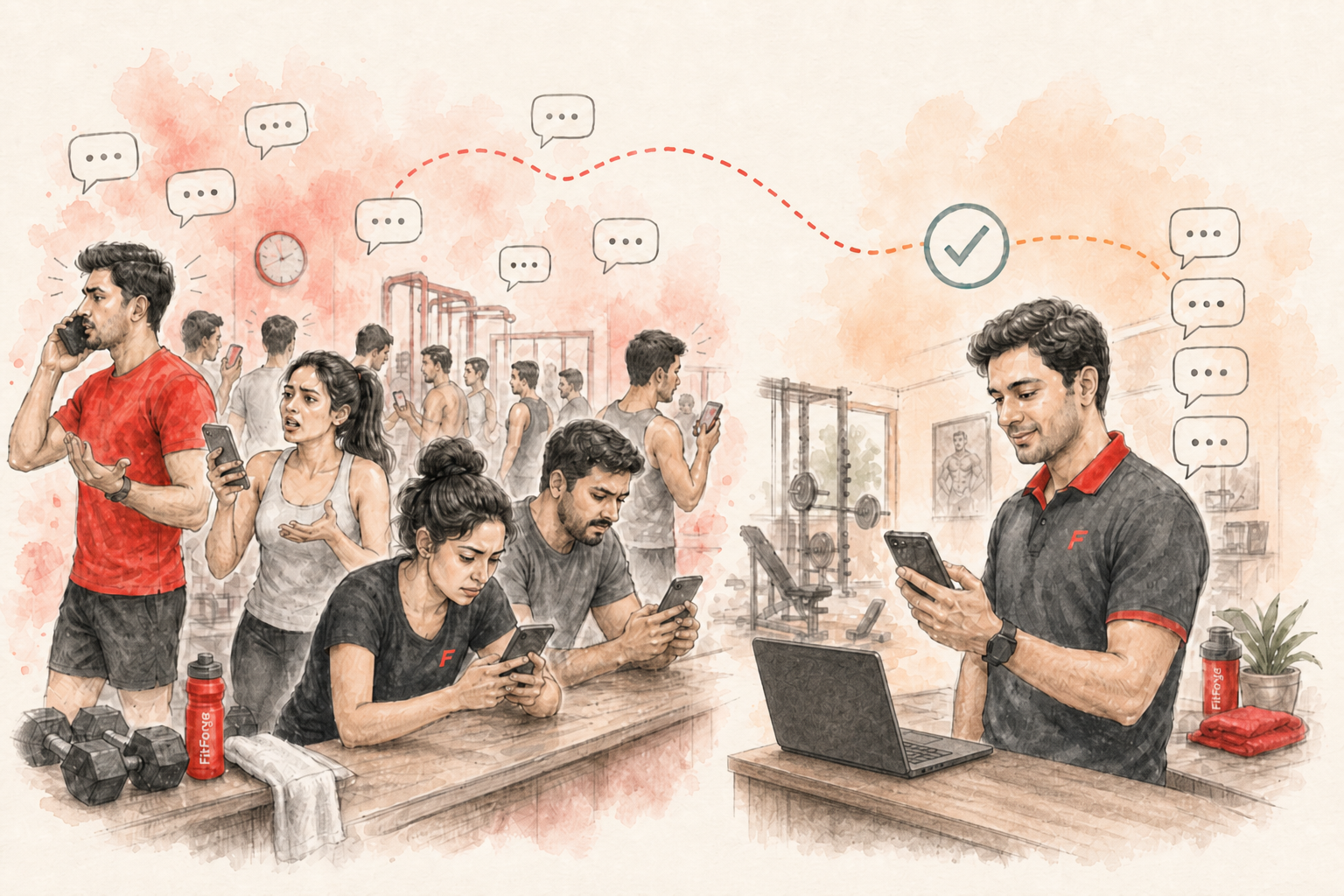
Watch the desk between 7 and 9pm. Between check-ins, staff are copy-pasting “sir your membership is expiring” into twenty chats, mixing names, sending last month’s plan price, and missing the people who actually expire tomorrow. That is not engagement. That is a second unpaid job.
The owner often thinks messaging is “covered” because someone is typing. In practice the evening rush decides who gets a reminder: whoever is easiest to find in the recent chats, not whoever’s plan ends this week. The quiet, regular member who never texts the gym is the first one lost.
WhatsApp is not the villain. Unstructured WhatsApp is.
The real-time problem
WhatsApp is the operating system of Indian gyms. Members expect it. Owners expect replies on it. That is fine. The problem is treating it like a pile of private inboxes instead of a queue with a script and an owner.
There is usually no single list of who must be messaged today. There is no approved template, so every receptionist invents tone and price. There is no record of who was messaged yesterday, so two staff can ping the same person while Tuesday’s expiries sit untouched because the desk was covering lockers. And if you run two branches, the owner at branch B cannot see that branch A skipped the list entirely.
Personal phones make it worse. A trainer “helps” by messaging from their own number. The renewal talk leaves the gym. When that trainer resigns, the thread — and the member relationship — leaves with them.
Why it quietly kills revenue
Late reminders become discounts. Once a member has already lapsed, the desk feels pressure to “save” them with a start-from-the-1st deal. That trains the whole floor to wait until after expiry, when you are weakest.
Missed reminders become silent churn. Many members do not argue or complain. They simply stop opening your chat and join the gym with the better glass frontage.
Duplicate reminders from two staff feel unprofessional. One message with the wrong plan price destroys trust faster than silence.
And every hour spent typing is an hour not selling PT, not logging walk-ins, and not collecting cash that is already on the counter.
What a calm WhatsApp system looks like
A calm system is boring on purpose:
- One gym number for renewals and dues.
- Three short scripts the desk is not allowed to rewrite: expiry, dues, payment received.
- A morning queue of who must be contacted today, not a memory exercise at 8pm.
- Humans only when the member replies with a decision, a dispute, or a plan change.
- A Friday check: messages sent versus members who expired. If the numbers do not match, the queue is still optional.
If your “process” cannot survive a busy Tuesday with a new receptionist, you do not have a process.
A playbook you can run this week
- Write three scripts and pin them. Expiry, dues, and payment received. Keep each under five lines. Include the member’s name placeholder, the exact date, the plan options, and one clear next step. Ban creative writing at the desk.
- Build a daily queue every morning. Who expires in the next seven days, who is overdue, who promised to pay by today. Generate it before peak hour — do not invent it while members are queuing for lockers.
- Move billing talk off personal phones. Gym number only for renewals and dues. Trainers can still coach in chat. Money and membership status stay on the gym thread.
- Separate reminder from negotiation. The first touch is a reminder. Negotiation, freezes, and complaints go to a named owner or manager — not whoever is free on WhatsApp.
- Audit on Friday. Count messages sent against members who expired or went overdue. Spot the gaps. Fix the queue, not the “we were busy” story.
Sample scripts you can adapt
Expiry (seven days out):
“Hi {name}, your {plan} ends on {date}. You can renew the same plan or switch — reply here and we will confirm at the desk. Prefer to pay by {pay-by date} so your access stays uninterrupted.”
Dues:
“Hi {name}, ₹{amount} is pending on your membership (due {date}). You can pay at the desk or share the UPI screenshot here so we can update your record today.”
Payment received:
“Hi {name}, payment of ₹{amount} is updated on your membership. Thank you — see you at the gym.”
Short beats clever. Accurate beats friendly-but-wrong.
Common mistakes that keep the chaos alive
- Sending a blast to “everyone expiring this month” with no names or dates.
- Letting five staff invent five versions of the same reminder.
- Reminding people who already paid because the payment never hit the member record.
- Using WhatsApp as the only system of record — when the chat scrolls away, the due disappears.
- Measuring “activity” (messages sent) instead of outcomes (renewed, paid, expired with a logged reason).
How FitForge maps to this workflow
WhatsApp automation is built for membership and payment reminders so staff are not pasting during peak hour. WhatsApp for gyms is the product view of the same workflow: one gym channel, timed reminders, humans for exceptions. To run it with billing and attendance in one place, see FitForge pricing.
Connect WhatsApp in Settings. Automation does not replace a named owner. It stops the paste-fest so the owner can spend evenings on decisions, not typing.
Related guides
FAQ
Common questions
Won’t members hate automated WhatsApp?+
They hate spam and wrong dates. A short, accurate expiry or due message from the gym number is what they already expect. Chaos happens when five staff send five versions.
Should trainers message from their personal phones?+
Not for renewals or dues. Personal chats cannot be audited, and the gym loses the thread when that trainer quits.
What still needs a human?+
Plan changes, freeze requests, complaints, and “I already paid.” The reminder can be automatic. The exception should not be.
How many messages is too many?+
For a clean expiry: one at seven days, one at two days, one on expiry day if unpaid. More than that without a reply usually means the script is wrong or the door policy is soft.