Retention · 21 August 2026 · 12 min read
Spot inactive members before they cancel in silence
Use visit drop-off — not the cancel call — as the first churn alarm.
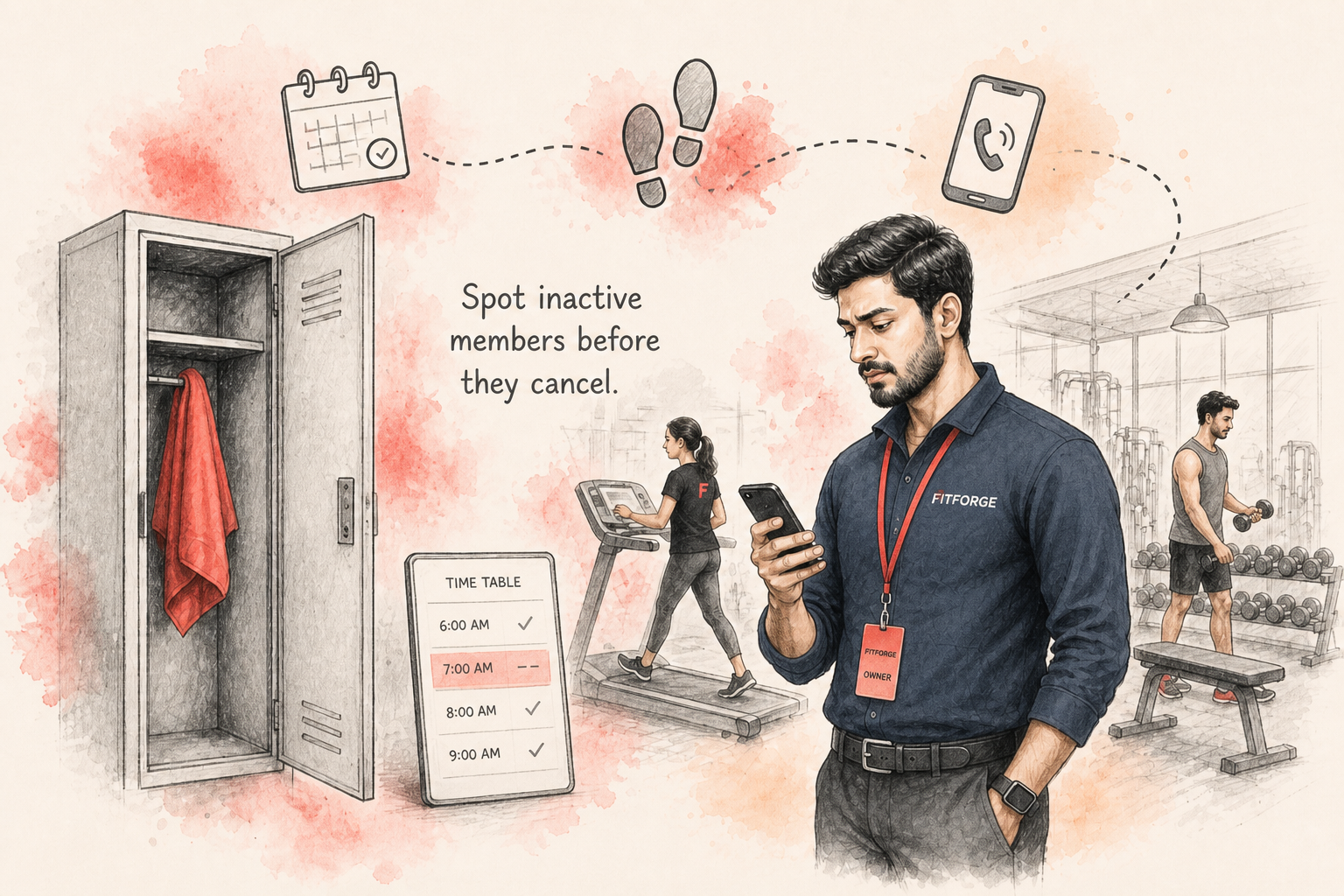
Cancels are late news. The real signal happened three weeks earlier: the member who used to hit 7am Monday simply stopped. Nobody noticed because the desk was busy, the trainer assumed they were travelling, and the owner looks at join count, not empty lockers.
By the time the renewal WhatsApp goes out, they have already built a new habit somewhere else — or no habit at all. Either way, your “retention problem” started as an attendance problem you never looked at.
The real-time problem
Without a visit log you cannot see drop-off. Diary ticks and familiar faces miss the people who still have a valid plan but have emotionally left. Those members will not argue at the desk. They will ignore the renewal message. That is silent churn, and from the owner’s chair it feels like “the market is slow.”
Gyms have an advantage most software businesses do not: you can see the body not arriving. Most neighbourhood gyms still do not look. Attendance lives in a register nobody reviews, or in QR data nobody opens on Monday morning.
Informal freezes make the fog thicker. A trainer says “they’re resting two weeks.” Two weeks becomes six. The member still counts as active revenue. The floor knows they are gone. The spreadsheet disagrees.
Why it quietly kills revenue
An unused membership still looks like monthly revenue until the day it does not renew. You also miss the cheap saves: a timetable change, a trainer switch, a proper freeze, a form fix, a crowding complaint — interventions that only work while they still think of themselves as your member.
Replacement cost is always higher than a two-minute check-in call. Ads, trials, closing time, and onboarding a stranger cost more than retaining someone who already knows your lockers.
Stacked leaks are common: inactive plus overdue, or inactive plus about-to-expire. If you only watch joins, you will celebrate new members while the middle of your roster hollows out.
What “active” should mean in your gym
Define it in plain language, not vibes:
- Frequent: was coming 3+ times a week; quiet for 7 days → call.
- Regular: 2 times a week; quiet for 10–14 days → call.
- Weekend-only: missed two weekends in a row → call.
- PT clients: missed scheduled sessions → trainer owns the same-day follow-up.
Write the rules on one page. If staff cannot explain them, they will not run them.
A playbook you can run this week
- Define “usual” per member. Even a rough tag helps: frequent, regular, weekend, PT. Perfect data can wait; a shared definition cannot.
- Pull a Monday inactive list. Live plan + sharp drop versus usual. Include phone, last visit, trainer if any, and plan end date.
- One human touch from a named person. Not a blast. “We noticed you missed your usual days — all okay?” Listen first. Pitch second, if at all.
- Log the outcome. Travelling, injury, unhappy with crowding, money, schedule, unknown. Unknown is allowed once. Twice means you still have no relationship.
- Tie inactivity to the door and to renewals. If they are inactive and overdue or expired, you already have two leaks stacked — fix access and money in the same conversation.
What to say (and what not to)
Good:
“Hi {name}, we noticed you haven’t been in for your usual days. Everything okay? If the timing or crowding is off, tell us — we can help adjust.”
Bad:
“Hi, special discount if you renew today!” sent to someone who has not visited in three weeks. That message confirms you only notice them when you want money.
If they need a freeze, put an end date on it. Informal rest is how inactive members stay invisible.
Common mistakes
- Waiting for the cancel call before you care.
- Blasting every quiet member with the same offer.
- Ignoring informal freezes.
- Celebrating join count while visit trends fall.
- Checking attendance only when cash feels thin.
How FitForge maps to this workflow
The visit leaderboard makes who is showing up visible instead of anecdotal. It only works if visits are real, which is why QR check-in matters — a nod at the desk is not a trend you can review on Monday. To run attendance and memberships together, see FitForge pricing.
A leaderboard will not save a member who already joined elsewhere. It gives you the week you still had a chance.
Related guides
FAQ
Common questions
How many missed visits should trigger a call?+
For a member who used to come four times a week, seven quiet days is enough. Waiting until they miss a whole month is waiting until they have a new gym.
Isn’t this just being pushy?+
A short “we noticed you missed your usual days — all okay?” is coaching. Silence until expiry is how you discover they left via the bank statement.
What if they froze informally with a trainer?+
Informal freezes are still inactive members. Put a date on it or you will keep counting them as healthy revenue.
Who should make the call?+
Preferably someone they already know — their trainer or the manager — not a cold blast from a number that only sends offers.